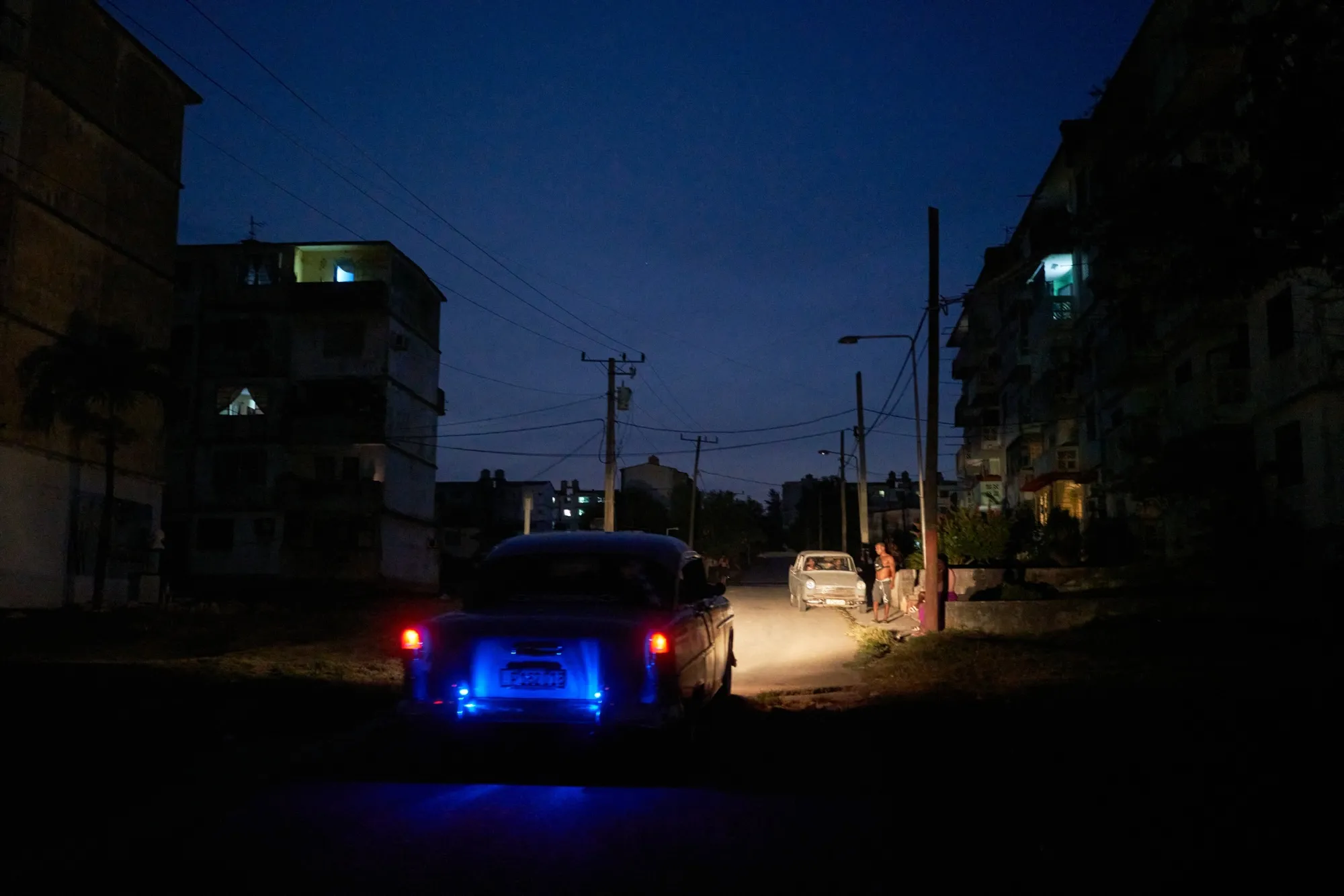
HAVANA — The Cuban government announced on Saturday that electricity has been partially restored across the island following a significant power outage that left millions in the dark for two days.
Energy Minister Vicente de la O Levy reported that the electrical grid had regained 500 megawatts of power by early Saturday, a stark contrast to the usual generation of 3 gigawatts. He shared on the social media platform X that “several substations in the west now have electricity.”
Levy added that two thermoelectric power plants are back online, with two more expected to resume operations shortly.
The blackout began Thursday evening when one of the country’s major power plants failed, leading to half of Cuba losing power, which was soon followed by a complete blackout across the island on Friday morning.
Havana’s electricity company noted that a segment of its western system was disconnected due to the failure of one of its service plants, resulting in further outages as the total megawatts dropped from 500 to 370.
The streets of Havana, home to around 2 million residents, were eerily quiet on Saturday, with few vehicles on the road as people relied on candles and lamps for light. The blackout not only affected lighting but also disrupted essential services like water supply, which relies on electricity for pump operations.
This incident marks Cuba’s most severe blackout in two years, reminiscent of previous power failures following significant hurricanes that damaged infrastructure, taking days for restoration. Throughout this year, residents have experienced electricity outages lasting up to eight hours daily.
The blackout was attributed to an increase in demand from small- and medium-sized businesses, along with residential air conditioning usage. The situation worsened due to breakdowns in aging thermoelectric plants that have not received adequate maintenance, coupled with fuel shortages for operational facilities.
In response to the crisis, the Cuban government has implemented emergency measures aimed at reducing electricity demand. This includes the suspension of school and university classes, the closure of certain state-owned enterprises, and the cancellation of non-essential services. Officials indicated that during peak hours, approximately 1.64 gigawatts of electricity went offline, roughly half of the total demand at that time.
Additionally, changes to electricity rates for small- and medium-sized companies are under consideration as part of the government’s efforts to manage the energy crisis.